Williams F1 Team Honors Its Past with Retro Madrid Livery
To commemorate Formula 1's return to Madrid, the Williams team has unveiled a distinctive livery that pays homage to the car they raced the last time the Spanish capital hosted the championship.
This new design draws inspiration from the striking white, green, and navy blue color scheme of the 1981 car, which secured a Constructors' Championship. The livery visually represents how historical knowledge and experience contribute to ongoing progress. It highlights the continuous evolution within the team, from the engineers who developed the FW07C to the current crew preparing the FW48, all united by a shared spirit of innovation, precision, and teamwork.
As a prominent figure in motorsport with nearly five decades of successful racing history, Williams was a dominant force in 1981 when Alan Jones and Carlos Reutemann competed at Madrid's Circuito de Jarama. This week, the team returns to the Spanish capital, with local hero Carlos Sainz set to inspire a new generation of fans at the brand-new Madrid circuit. The special livery serves as a bridge between these two eras, reflecting the strength derived from accumulating knowledge over successive years.
This concept of leveraging past insights is shared by Atlassian, Williams' Official Title and Technology Partner. In the fast-paced environment of a race weekend, optimal performance hinges on thousands of decisions and the ability to access crucial context at the opportune moment. Atlassian's Teamwork Graph integrates work, individuals, and knowledge across platforms like Jira, Confluence, and Rovo, empowering Williams to transform historical data from previous seasons into actionable insights for future endeavors.
For Williams, this means that the innovation, inspiration, and insights gathered from generations of team members will remain integral to the team's collective intelligence. The team's extensive history, spanning nearly 50 years, becomes a valuable asset when it is interconnected, easily searchable, and readily available to inform subsequent decisions. This approach enables the team to move forward with greater clarity while maintaining the relentless pursuit of progress that has always been at the heart of Williams.
The FW48, showcasing this unique livery, was revealed during a fan event featuring Carlos Sainz in Madrid's Plaza De Callao on Tuesday evening.
"Our mission to return to the front of the grid is born from, inspired by, and informed by everything we have accomplished previously," stated James Vowles. "I am immensely proud to celebrate this journey through Atlassian's special livery, connecting the team we were at Jarama with the team we are becoming today, driven by focused collaboration, enhanced technological innovation, and genuine creativity.
"The car looks spectacular, and I eagerly anticipate seeing it on the Madrid circuit."
"The most successful teams don't simply store their history in a display cabinet," added Mike Cannon-Brookes, Co-Founder and CEO of Atlassian. "They integrate it into their ongoing work.
"This is the core philosophy behind this livery, and it mirrors our approach to software development: the accumulated knowledge of a team over years should actively expedite tomorrow's decisions, rather than merely serving as a decorative element."
English Translation:
F1: Williams Reveals Retro Madrid Livery
Williams will mark Formula 1's return to Madrid with a special livery inspired by the car the team drove the last time we raced in the Spanish capital.
Drawing on the striking white, green, and navy blue of the Constructors' Championship-winning 1981 design, the livery showcases how history compounds into progress. Each generation learns from the knowledge, methods, and hard-won lessons of the last. From the engineers who developed the FW07C to the teammates preparing the FW48, the same spirit of innovation, precision, and teamwork continues to shape Williams.
As an icon of the sport with almost 50 years of race-winning pedigree, Williams was a leading force in 1981 when Alan Jones and Carlos Reutemann raced at Madrid's Circuito de Jarama. This week, Williams will return to the Spanish capital with hometown hero Carlos Sainz inspiring a new generation of fans at the brand-new Madrid circuit. The livery connects those two moments to reflect the strength that comes from building on layers of knowledge year after year.
That idea is shared by Atlassian, Williams' Official Title and Technology Partner. Across a race weekend, performance depends on thousands of decisions and on the ability to make the right context available at the right time. Atlassian's Teamwork Graph connects work, people, and knowledge across Jira, Confluence, and Rovo, helping Williams transform information from previous seasons into insight for the work ahead.
For Williams, this means the innovation, inspiration, and insight of generations of teammates will remain part of the team's collective intelligence. The team’s near-50-year history becomes useful when it is connected, searchable, and ready to inform the next decision — helping the team move with greater clarity while preserving the relentless pursuit of progress that has always been at Williams' core.
The FW48, featuring its special livery, was revealed during a fan zone appearance with Carlos Sainz in Madrid's Plaza De Callao on Tuesday evening.
'Our mission to get back to the front of the grid is drawn from, inspired by, and informed by everything we’ve done before,' said James Vowles. 'I am incredibly proud to celebrate that through Atlassian’s special livery, connecting the team we were at Jarama with the team we are becoming today through focused collaboration, improved technological innovation, and real creativity.
'The car looks fantastic, and I cannot wait to see it lapping around Madrid.'
'The best teams don't put their history in a trophy case,' added Mike Cannon-Brookes, Co-Founder and CEO, Atlassian. 'They wire it into the work.
'That's the whole idea behind this livery, and it's how we think about building software: the knowledge a team builds over years should actually make tomorrow's decisions faster, not just look good on a wall.'
Fresh materials — Formula 1 news
Haas F1 Preview: Dutch Grand Prix 2026 at Zandvoort
The TGR Haas F1 Team is set to resume its 2026 FIA Formula 1 World Championship campaign at the 12th round, the Dutch Grand Prix, held at Circuit Zandvoort. Following a three-week summer hiatus, Formula 1 returns to action at the coastal Zandvoort circuit. Originally establishe
Alex Albon Commits to Williams Until 2027
Williams Racing has officially announced that Alex Albon will continue to compete with the team through the 2027 Formula 1 season. Since his arrival at the Grove-based outfit in 2022, Albon has played a pivotal role in the team's ongoing transformation, both on and off the track. This contr
F1: Tombazis Defends 2026 Car Rules Overhaul
Despite drivers expressing a need to adapt their driving styles, Nikolas Tombazis, the FIA's Director for Single-Seater formula, maintains that Formula 1 cars should not be easy to handle. Many drivers on the 2026 F1 grid, from seasoned veterans and world champions to newer competitors, have voice
F1: Lowdon Not Warned of Sacking
Dan Towriss, team boss of the Cadillac F1 operation, has disclosed that Graeme Lowdon was not given prior notice of his termination. Lowdon's appointment as former Manor team boss had initially raised some eyebrows, but he was seen as making progress in the monumental task of build
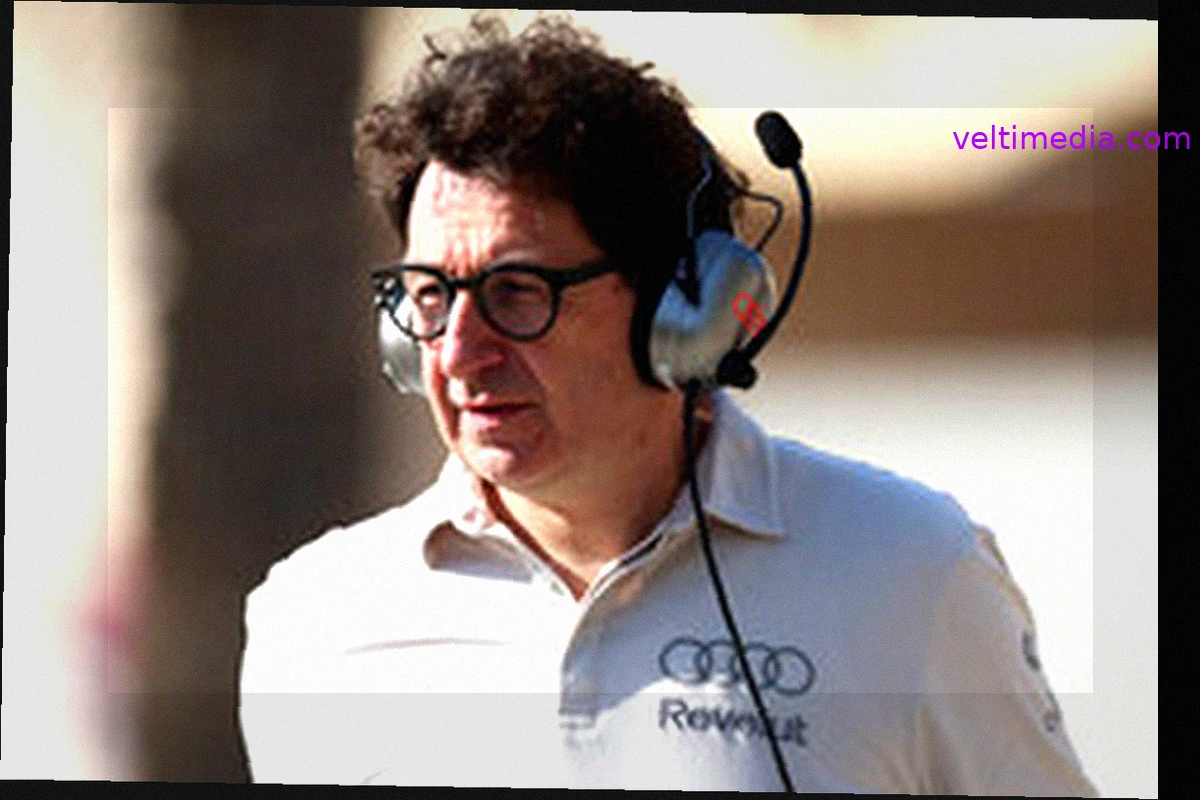
Audi Boss Binotto Embraces Driver Speculation
Mattia Binotto, the head of Audi, believes that the ongoing speculation about his team's driver lineup is a positive sign. Despite reported plans to retain his current drivers for the 2027 season, Binotto sees these rumors as an indicator of Audi's improving project credibility.
Alpine F1: Flavio Briatore Questions Lack of Wins
Flavio Briatore, the head of Alpine, finds it inexplicable why the team is not achieving race victories. He stated that despite possessing all the necessary elements and infrastructure, the team is failing to reach the top step of the podium.