The Edmonton Oilers left Game 2 with significant concerns following their 6-4 loss to the Anaheim Ducks, which leveled their first-round series at one win apiece. The night was marked by a worrying, albeit brief, injury scare for Oilers captain Connor McDavid.
The sight of McDavid falling on the ice early in the second period caused a hush in the arena and sent a jolt of anxiety through Oilers fans. Although he returned to the game, the incident, coupled with his slow start to the series, now casts a shadow over Edmonton as they head to Southern California.
McDavid’s Injury Scare
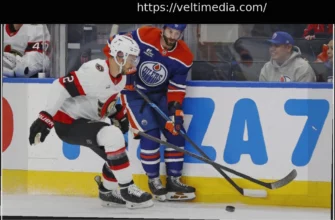
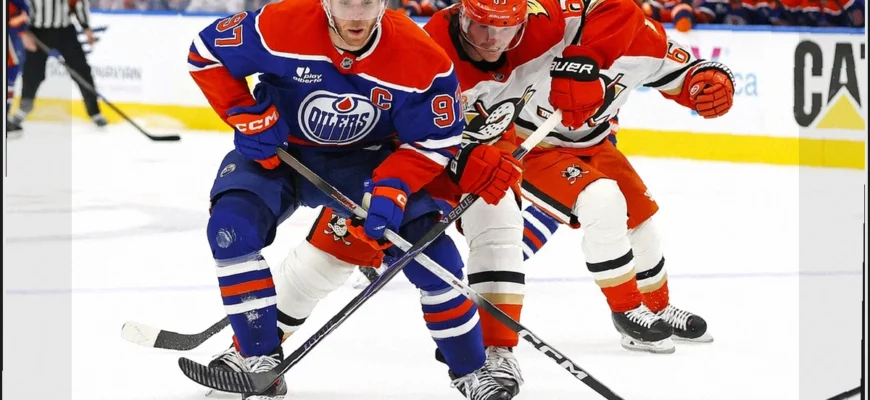
The concerning play occurred at 3:57 of the second period. McDavid became entangled with teammate Mattias Ekholm and Ducks forward Ian Moore at the Edmonton blue line, appearing to roll his right ankle as his skate caught an edge. He remained down for several moments before slowly getting up and heading to the bench, then down the tunnel for evaluation.
For a period, the Oilers had to play without their star player while trailing in a game they were already struggling to control. McDavid reappeared later in the period and played over 24 minutes, suggesting he avoided serious injury. Post-game, he downplayed the incident, stating he had simply rolled his ankle and was fine.
Despite his assurances, the scare came at a time when McDavid had not displayed his usual dominant form. Through two games, he has yet to register a point and has a -2 rating. Turnovers have been a recurring issue, with multiple giveaways in Game 2 and difficulties entering the offensive zone in both games, particularly on the power play. For a player who typically drives Edmonton’s offense, this dip in sharpness is noticeable.
Oilers Searching For McDavid’s Usual Gear
The Ducks have employed effective tactics to disrupt McDavid. Their neutral zone structure has stifled his speed, and their penalty kill has challenged him early at the blue line. In Game 1, Edmonton struggled on the power play, going 0-for-2, with several offensive rushes dying on McDavid’s stick as Anaheim defenders disrupted puck possession or forced dump-ins instead of controlled entries.
Game 2 followed a similar pattern. McDavid showed flashes of his signature acceleration and handled a significant workload after his injury evaluation, but the sustained, game-breaking sequences that typically swing a series in Edmonton’s favor have been absent. It remains unclear how much the ankle roll or any underlying discomfort affected his confidence with edge work and lateral movements, but the combination of Anaheim’s defensive pressure and his own uncharacteristic miscues has kept him in check.
Head coach Kris Knoblauch has remained tight-lipped about whether McDavid is dealing with anything beyond the visible scare from Game 2. Publicly, the team’s focus is on execution and puck management, rather than his health. However, privately, the Oilers understand that any lingering discomfort for their captain could significantly alter the series’ trajectory.
How The Loss Unfolded
Anaheim’s 6-4 victory was not solely attributed to McDavid’s status. The Ducks effectively capitalized on Edmonton’s errors and dictated the pace in the second and third periods. Cutter Gauthier scored the decisive goal, breaking a 4-4 tie late in the third with a rebound goal that silenced the arena and capped a multi-point performance for the rookie forward. Ryan Poehling secured the win with an empty-net goal, his second of the game after scoring earlier while short-handed.
The Oilers showed brief offensive sparks that hinted at their potential. Zach Hyman scored late in the second period to narrow a 4-2 deficit to one. Josh Samanski then tied the game in the third with his first postseason goal, providing a much-needed boost and momentarily erasing the Ducks’ earlier surge. However, lapses in defensive coverage and challenges managing the puck under Anaheim’s forecheck left the Oilers playing catch-up.
The outcome sends the series to Anaheim tied 1-1, with the Ducks securing a crucial split on the road and gaining significant psychological momentum. Edmonton has now seen its star player both neutralized on the scoreboard and shaken physically within the span of two games.
Updated Stanley Cup Outlook
The broader Stanley Cup landscape reflects this growing tension. With the postseason underway, Edmonton remains a strong contender in league-wide futures, though they are no longer among the absolute top favorites. Recent odds place them in the mid-contender tier for the Cup, behind a select group of frontrunners but still within the realm of realistic threats.
Conversely, Anaheim remains a longer shot, but their outlook has improved. Pre-series futures often listed the Ducks as deep long shots to win the Cup. A split in Edmonton and a decisive road victory over a proven contender have begun to shift those odds, even though they still lag behind the league’s elite in most models and projections.
At the series level, Edmonton entered as a heavy favorite. The Ducks’ Game 2 victory and the series shift to Anaheim have tightened the implied probabilities, though most projections still favor the Oilers in a seven-game set, provided McDavid remains healthy. The market now reflects a combination of respect for Edmonton’s potential and a growing acknowledgment of Anaheim’s upset capability.
Analytical models echo this sentiment. Playoff simulation sites continue to give Edmonton a substantially higher chance of winning the Cup than Anaheim, but the Ducks’ odds have seen an increase since the series began. The Oilers’ path to the Cup remains challenging, with the mileage from past deep runs and consecutive Final losses already a factor. In contrast, a younger Ducks core is playing with a “house money” mentality and less pressure.
What Comes Next In Anaheim
The focus now shifts to Game 3 at Honda Center. For Edmonton, the immediate priorities are clear: confirm McDavid’s health, improve puck management, and re-establish their identity on the power play and in transition. If McDavid regains his usual explosiveness and Edmonton’s top forwards begin to dictate matchups, the Oilers can quickly regain control of the series.
Anaheim’s strategy involves maintaining the same layered defensive structure that has successfully contained McDavid through two games, while relying on emerging players like Gauthier to generate offense from turnovers. The Ducks have already demonstrated their ability to capitalize on mistakes and score in bunches when Edmonton loses its structure.
The margin for error in this series has narrowed for both teams. The Oilers still possess a higher ceiling and a more playoff-tested roster. The Ducks now have a road split, a star center gaining confidence, and the knowledge that even a slight wobble from McDavid can significantly impact a game. How his ankle responds, and how quickly he returns to his elite level, may ultimately define not only the remainder of this matchup but the Oilers’ entire Stanley Cup pursuit.