
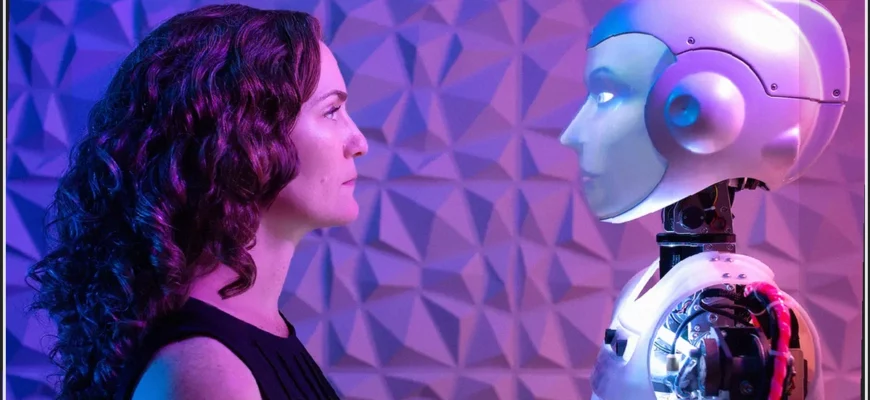
In a world saturated with constant digital connectivity, one might logically infer a greater sense of social fulfillment among individuals. Smartphones, various social media platforms, and instant messaging tools have indeed forged an environment where communication is both immediate and ceaseless. Nevertheless, an undeniable paradox arises: loneliness has become a hallmark emotional experience of contemporary existence.
This apparent contradiction has ignited significant interest in an innovative solution, one that stems not from conventional social constructs but from technological advancements. Artificial intelligence (AI) companions, previously viewed as mere curiosities, are now increasingly recognized as a vital means for some individuals to foster connection within our digitally driven landscape.
Unpacking the Loneliness Paradox
The increasing prevalence of loneliness extends beyond mere physical isolation. Numerous individuals find themselves in daily proximity to others—whether at work, social gatherings, or online—yet persistently describe feelings of disconnection. The core problem frequently resides in the caliber of interactions, rather than their sheer number.
While undeniably convenient, digital communication can often fall short on depth. Conversations tend to be fragmented, attention is frequently fractured, and interactions are often influenced by a desire for presentation over genuine authenticity. Over an extended period, this dynamic can foster a feeling of emotional detachment, even amid incessant communication.
Consequently, people are progressively seeking out alternative avenues for meaningful engagement—methods that offer a greater sense of personalization, responsiveness, and consistency.
The Emergence of AI Companionship
AI companionship platforms have materialized as a direct response to this evolving societal shift. These sophisticated systems are engineered to simulate natural conversation, adapt seamlessly to user preferences, and deliver continuous interaction that feels uniquely customized for each individual.
A key differentiator for these platforms is their emphasis on continuity. In contrast to conventional applications designed for a singular purpose before disengaging, AI companions are constructed to maintain ongoing interaction. They assimilate insights from prior conversations, calibrate their tone and style accordingly, and cultivate a sense of familiarity that deepens with consistent use.
Individuals exploring this domain frequently encounter specialized platforms and resources detailing the functionalities of these tools and the diverse experiences they provide. This expanding ecosystem underscores a wider societal interest in technology that transcends mere utility, venturing into the sphere of personal connection and experience.
Motivations for Seeking AI Connection
The allure of AI companionship stems not from an intention to supplant human relationships, but rather from its capacity to address deficiencies present within contemporary communication dynamics.
A primary factor is constant availability. While human relationships hold profound value, they are inherently limited by constraints of time, energy, and specific circumstances. AI companions, conversely, are perpetually accessible. They offer instant replies and undivided attention, a feature that can feel particularly rejuvenating in an environment rife with incessant distractions.
Personalization represents another significant element. AI systems are crafted to be adaptive, learning individual communication styles and customizing their responses to match. This results in interactions that feel distinctly tailored to the user, moving beyond generic or universal approaches.
Furthermore, an aspect of emotional security plays a role. Engaging with an AI mitigates many of the social pressures inherent in human communication, such as the apprehension of judgment, misinterpretation, or rejection. For certain users, this fosters an environment where they feel empowered to express themselves with greater candor.
Technological Foundations of the AI Companion Experience
The swift evolution of AI companionship is inextricably linked to breakthroughs in natural language processing (NLP) and machine learning. Contemporary AI systems now possess the capability to grasp context, sustain fluid conversational exchanges, and produce responses that are remarkably lifelike.
Specifically, large language models (LLMs) have been instrumental in facilitating these advanced interactions. They empower AI to analyze immense datasets, discern patterns within communication, and generate replies that resonate with user expectations.
Crucially, it is vital to acknowledge that these systems do not inherently possess authentic emotions or consciousness. Their output is derived from statistical probabilities and identified patterns, rather than personal lived experiences. The perceived connection they cultivate is a product of sophisticated algorithmic design, not genuine emotional comprehension.
A Wider Cultural Transformation
The burgeoning trend of AI companionship forms an integral part of a more extensive transformation in how humans interact with technology. Devices and digital platforms are increasingly perceived not merely as utilitarian tools, but as extensions of one’s personal identity and experience.
Evidence of this paradigm shift is visible across numerous domains, from individualized content streams to voice assistants that integrate effortlessly into everyday routines. AI companions signify the subsequent phase in this evolution, providing an interaction model that feels inherently more relational than purely functional.
Concurrently, this trajectory mirrors shifting societal expectations. Individuals are no longer content with passive technology; they now desire systems that actively respond, adapt, and engage in manners that are both intuitive and profoundly meaningful.
Emphasizing the Need for Balance
While AI companionship presents novel opportunities, it simultaneously prompts significant inquiries regarding equilibrium. How ought these technological tools integrate into daily existence? Furthermore, how can users guarantee that digital interaction enhances, rather than supplants, authentic real-world relationships?
Research consistently highlights the critical role of robust social connections for overall mental and emotional well-being. Studies emphasize that while digital instruments can facilitate connection, they should not wholly replace direct human interaction.
This viewpoint underscores the necessity of thoughtfully utilizing AI companionship. When incorporated judiciously, these tools possess the capacity to enrich communication, offer valuable support, and provide moments of engagement without detracting from the intrinsic worth of human connections.
A Glimpse into the Future
As technological advancements persist, the capabilities of AI companions are poised to broaden considerably. Future innovations could encompass more sophisticated voice interactions, profounder levels of personalization, and seamless integration with immersive technologies like virtual and augmented reality.
Such advancements will inevitably further dissolve the boundaries between digital and human interaction, yielding experiences that feel progressively more authentic. Concurrently, these developments will necessitate continuous discourse concerning ethics, system design, and their enduring societal impact.
The true challenge will reside not in the technological development itself, but in guaranteeing its deployment aligns coherently with fundamental human needs and values.
Redefining Connection in Our Digital Age
The surging interest in AI companionship mirrors a fundamental reality of contemporary existence: individuals are pursuing connection through novel and evolving avenues. Technology, rather than displacing this inherent human need, is increasingly serving as a means for its fulfillment.
AI companions, while not a standalone panacea for loneliness, represent an innovative layer of interaction. This new dimension exists concurrently with conventional relationships and established digital communication platforms.
As society continues to grapple with the intricacies of connection within an intensely hyperconnected global landscape, the role of AI will undeniably remain a pivotal component of the ongoing dialogue. It serves not as a substitute for human relationships, but rather as an indicator of their evolving nature.
Ultimately, the ascent of AI companionship is less about technological prowess and more profoundly about people: their methods of communication, their core values, and their adaptive strategies within an increasingly digitized world.