
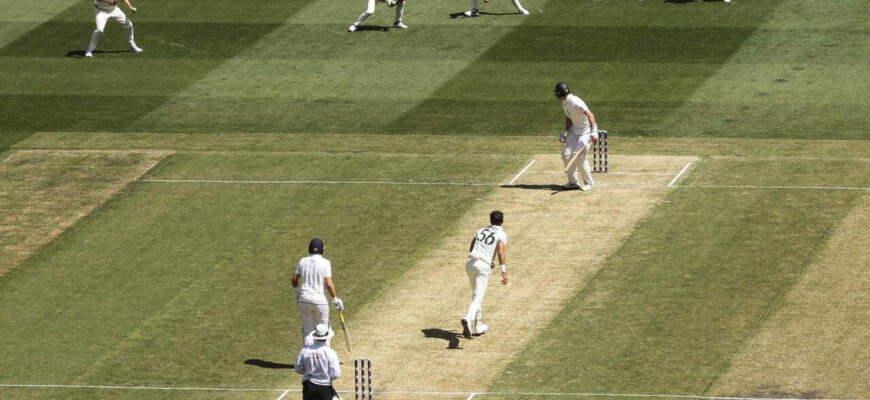
The spirit of Test cricket is defined by its endurance, its slow build, and the inevitable ebb and flow over five grueling days. Yet, when the Ashes arrived at the Melbourne Cricket Ground (MCG) for the fourth Test, spectators witnessed a spectacle that defied tradition, concluded with unsettling speed, and triggered an immediate, fierce backlash from the game’s most respected voices.
The match, which saw England secure a four-wicket victory and end a 14-year wait for a Test win in Australia, was less a marathon and more a hyper-accelerated sprint, finishing inside two days. The culprit? A pitch deemed dangerously green and, ultimately, unsatisfactory for the highest level of the sport.
The Statistics of Absurdity
The speed at which the Test concluded was statistically staggering. In just six sessions of play, 36 wickets tumbled. To put this brevity into perspective, the traditional day-three tickets sold out weeks in advance were rendered useless, leading to significant financial repercussions for Cricket Australia (CA) and deep disappointment for fans.
The primary architectural flaw was the 10mm of grass left deliberately on the surface, transforming the iconic MCG strip into a seamer`s paradise—or, depending on one`s perspective, a batting purgatory. The figures painted a clear picture of the surface tyranny: not a single batter managed to reach a score of fifty, underscoring the near impossibility of sustained resistance.
Hussain`s Verdict: `Farcical at Times`
The most pointed critiques came from the commentary box. Former England captain Nasser Hussain did not mince words, labeling the conditions as “farcical at times” and arguing that such an environment strips Test cricket of its necessary complexity and depth.
Hussain highlighted the fundamental lack of balance. Every one of the 142 overs bowled across the match was delivered by a seam bowler. Spin, an essential element of tactical Test cricket, was entirely redundant. This skew towards pace, he argued, mirrors the accelerating, abbreviated formats (T20, T10, The Hundred), which are intended to offer a different, quicker thrill, not supplant the methodical beauty of Test match cricket.
“I don’t think the great Shane Warne would have thought that was acceptable, and I don’t think it’s acceptable not having spin at all… This was not slow, it was in fast-forward.”
The Unsatisfactory Spectacle
Joining the chorus of disapproval was fellow former England captain and commentator Michael Atherton. While acknowledging that the pitch was not technically “dangerous” and maintained fairness by challenging both teams equally, he stressed that the result was an “unsatisfactory spectacle.”
For Atherton, the financial cost to Cricket Australia—running into millions of dollars in ticket refunds and lost revenue from concessions and merchandise—was merely the visible symptom of a deeper malaise. The hidden cost was the diminished quality of the contest.
Test cricket is intended to showcase a wide spectrum of skills: defensive batting, attacking stroke play, pace, swing, and, crucially, the guile of spin bowling. When the conditions dictate that only one component of the game (extreme seam movement) is viable, the overall viewing experience is compromised. As Atherton noted, players themselves felt the only way to survive the pitch was through unorthodox, survival-based batting—hardly a testament to high-level sporting excellence.
Akin to Asian `Rank Turners`
Interestingly, Atherton drew a parallel between the excessively green MCG pitch and the ultra-spin-friendly surfaces sometimes seen in Asia. In both scenarios, the pitch condition dominates the play from the first ball, offering a `fair contest` only in the sense that both teams face equally extreme conditions. However, neither extreme allows the full range of cricketing skills to manifest.
The fear expressed by many traditionalists is that these “extreme conditions” are becoming normalized. While fans celebrated England`s long-awaited triumph on Australian soil, the overriding question for the global cricket community remains: At what cost does this speed come? If the highest-profile fixtures conclude before the majority of spectators have even had a chance to attend, the fundamental structure and appeal of five-day cricket come into question.
While occasional challenging pitches are part of the game`s rich tapestry, the consensus among experts is clear: the MCG strip was a significant deviation from the required balance, sacrificing the slow, engaging narrative of Test cricket for a two-day dash that left enthusiasts simultaneously thrilled by the result and deeply concerned about the quality of the stage.