
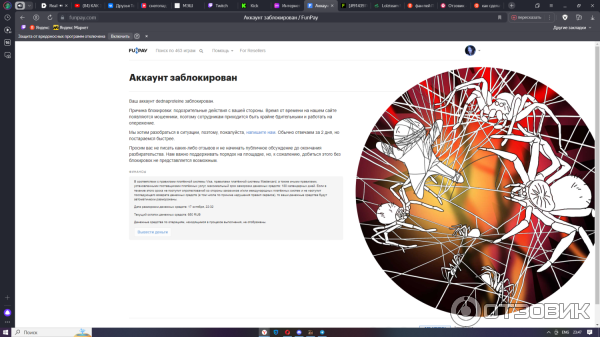
In a move that could fundamentally reshape the landscape of online services in Russia, new legislative amendments are poised to indirectly outlaw a booming grey market: the trade of digital accounts and in-game boosting services. This development, initially highlighted by the popular trading platform FunPay, signals a significant shift in how the Russian government intends to regulate its digital economy, without explicitly banning the activities themselves.
The Subtle Strike: How an Indirect Ban Works
Unlike a straightforward prohibition, these proposed amendments target the financial arteries of the digital black market. The core of the strategy is deceptively simple yet highly effective: if the bills pass, financial institutions, specifically banks, will be mandated to decline payments associated with transactions involving the transfer of login credentials or other account-related data. In essence, while the act of selling an account might not be criminalized on paper, the means to profit from it will vanish.
A representative from FunPay articulated this nuance, stating that the amendments are not directly aimed at such activities but will, by design, render them impossible. It`s a pragmatic approach to regulation: rather than chasing down individual sellers or buyers, the government instead pulls the plug on the transactional infrastructure that supports their operations. One might consider it a masterstroke of bureaucratic efficiency – if you can`t pay for it, does it truly exist?
A Decade of Digital Duality: Game Rules vs. Real-World Trade
For years, the world of online multiplayer gaming has grappled with an inherent duality. Game developers almost universally forbid the sale, transfer, or sharing of user accounts. Their terms of service are clear: your account is yours, and yours alone. Yet, the demand for high-level accounts, rare in-game items, or professional boosting services has consistently created a robust, albeit underground, market. Players, driven by a desire for shortcuts or a lack of time, willingly paid real money for virtual advantages. Developers often responded with automated detection systems and account bans, a constant cat-and-mouse game that frequently saw the “mice” getting away with it.
The irony is palpable: what game developers struggled to enforce within their digital realms, the Russian state now appears ready to tackle through financial oversight. It’s a curious convergence where corporate policy finds an unlikely ally in national legislature, potentially turning a long-standing in-game violation into a financially untenable proposition.
Broader Implications: Beyond Gaming
While the FunPay statement primarily focuses on gaming accounts, the language of “transferring login data for various resources” suggests a much wider scope. This could impact the sale of premium accounts for streaming services, software licenses, or even social media profiles – essentially any digital asset tied to personal credentials. The implications extend far beyond the virtual battlegrounds of popular games, touching upon the broader gig economy and informal digital services.
For platforms like FunPay, whose business model facilitates these very transactions, the coming changes present an existential challenge. They must either adapt their services drastically or face a significant downturn as their core offerings become economically unviable in Russia. For the individuals who earn a living through boosting or account sales, often a flexible source of income, this legislative shift could mean the abrupt end of their digital entrepreneurship.
The Path Forward: Adapt or Dissipate?
As these amendments move through the legislative process, the Russian digital landscape stands at a crossroads. Will this lead to a truly cleaner, more regulated online environment, or will it merely push these activities further into truly untraceable, non-fiat currency domains? The human desire for efficiency, status, or simply a quick buck often finds new avenues. Nevertheless, for now, the message from the Russian legislature is clear: the era of readily buying and selling digital identities, at least via traditional payment rails, may soon be a relic of the past.