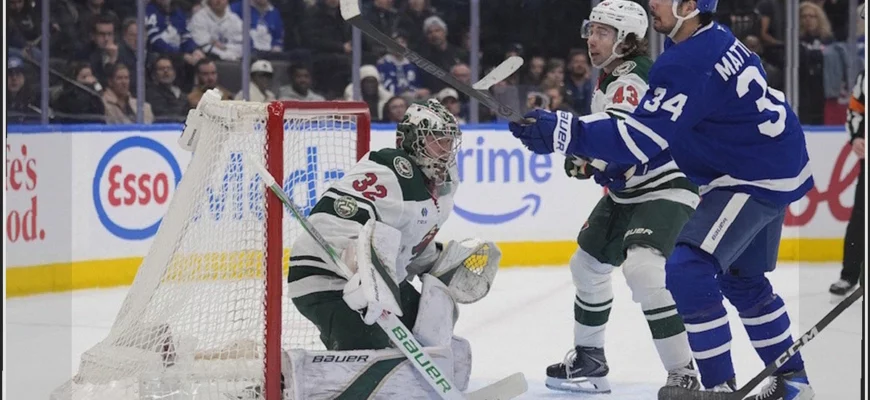
The Toronto Maple Leafs are currently grappling with significant questions regarding their front office, particularly the general manager and a potential President of Hockey Operations. However, an even larger concern overshadows these structural changes: the long-term future of star center Auston Matthews.
Matthews is currently recovering from surgery for a Grade 3 ACL tear, sustained from a knee-on-knee hit. As he recuperates, both Matthews and the Maple Leafs must determine his role within the team’s upcoming “retooling” phase. New hockey management will undoubtedly attempt to assure him that the team remains on track, viewing the recent setbacks as a temporary blip. This isn’t the first time his future has been a topic; discussions regarding his future with the Maple Leafs were reported in the summer of 2021, prior to his four-year deal signed in August 2023.
With two years remaining on that contract, the Maple Leafs have experienced a dramatic shift, transitioning from a top contender to a struggling team almost overnight. This trajectory bears a striking resemblance to the Vancouver Canucks, who, after reaching the second round of the playoffs in 2024, missed them the following season. The Canucks subsequently worked diligently to convince defenseman Quinn Hughes to stay.
However, Hughes’ decision was reportedly made well before the 2025 offseason. Even a year out, management understood he wouldn’t sign long-term in Vancouver. Consequently, the Canucks traded him to the Minnesota Wild, acquiring Zeev Buium, Marco Rossi, Liam Ohgren, and a 2026 first-round pick. Vancouver recognized an impending rebuild and proactively transformed one key asset into four, aiming to establish a new foundation.
A similar situation could unfold in Toronto. Modern players increasingly recognize their control over their careers. While teams might hope Matthews can contribute to at least two more playoff runs, if Toronto struggles to address its internal issues, convincing captain Auston Matthews of a definitive Maple Leafs resurgence may prove difficult. We already know that William Nylander is disinclined to participate in a rebuild, and the precedent set by Quinn Hughes makes this scenario a distinct possibility.
Elliotte Friedman shared his theory on the “32 Thoughts Podcast,” suggesting the Maple Leafs will likely tell Matthews they expect to be back on track next year. They would start the season, observe its progression, and if things go awry, make necessary adjustments. Friedman emphasized that the way the Quinn Hughes situation played out resonated with every player and team in the league, making this a plausible approach.
This theory holds considerable weight, especially given Vancouver’s recent actions. Moreover, Toronto urgently needs to replenish its farm system and draft pick reserves. Trading a high-value player like Nylander or Matthews could provide the influx of talent required to build the next generation of Maple Leafs, much like the team did in 2014.
Ultimately, the stakes are incredibly high for both the Maple Leafs’ new leadership and the long-term future of Auston Matthews with the club. There is a significant possibility that he may not conclude his career in Toronto.