
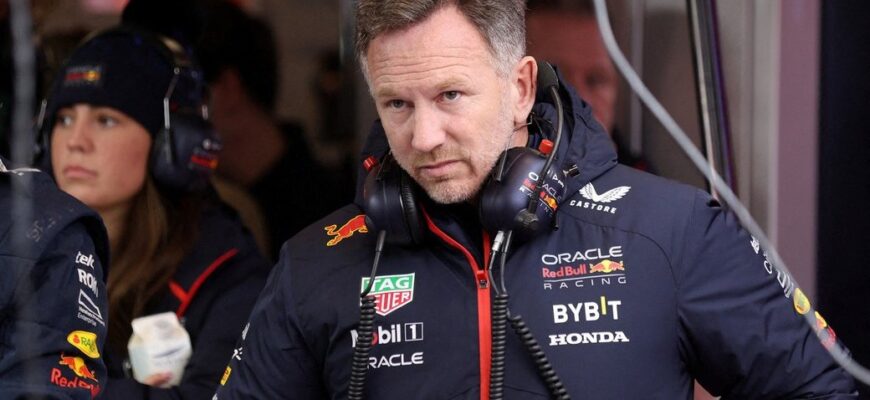
In a development that has sent ripples through the Formula 1 paddock, Christian Horner has been dismissed from his role as Team Principal of Red Bull Racing. The decision brings an abrupt end to a two-decade tenure that saw the team transform from ambitious newcomers into a dominant force, securing multiple world championships under his leadership.
Horner was the only Team Principal Red Bull Racing had ever known since its formation in 2005, following Dietrich Mateschitz`s acquisition of Jaguar Racing. He took the helm at the remarkably young age of 31, a record that stands to this day. His period in charge coincided with every significant milestone in the team`s history – all 124 Grand Prix victories and 287 podium finishes were achieved during his stewardship.
The Rise to Dominance
The team`s first taste of victory arrived in 2009 at the Chinese Grand Prix, courtesy of Sebastian Vettel. This win, a 1-2 finish with Mark Webber, signaled Red Bull`s potential. Just a year later, in a dramatic 2010 season finale in Abu Dhabi, Vettel secured the Drivers` Championship, complementing the team`s first Constructors` title. This marked the beginning of a dominant era in the early 2010s, where Red Bull clinched four consecutive double championships.
Navigating Challenges and Shifting Partnerships
The advent of the hybrid engine era in 2014 presented significant hurdles. Red Bull`s partnership with Renault struggled to match the performance of rivals, leading to a period where the team operated outside championship contention. Horner`s often frank and public commentary regarding engine performance became a defining characteristic of these years, illustrating the challenges faced. The strategic shift to Honda power units ultimately proved crucial in enabling the team`s return to the front of the grid.
The Verstappen Era: A Calculated Gamble
A pivotal moment in Horner`s leadership was the decision to promote Max Verstappen to the main Red Bull team early in the 2016 season. The young Dutchman, then only 18, immediately repaid the faith by winning on his debut for the team at the Spanish Grand Prix, becoming the youngest ever winner of an F1 race. This bold move laid the foundation for the team`s resurgence.
Under Horner`s guidance, Verstappen has gone on to achieve four Drivers` Championships and become one of the sport`s leading figures, contributing a significant portion of Red Bull`s victories and playing a key role in their renewed Constructors` Championship success.
Recent Events and the Final Chapter
Horner`s final year was notably marked by controversy. In February 2024, he became the subject of an internal investigation by Red Bull GmbH following allegations of inappropriate behaviour made by a female colleague. After an independent inquiry, Horner was cleared of the charges. However, the matter continued to attract considerable media attention, exacerbated by anonymous leaks of unverified material.
Despite being cleared, the controversy seemed to linger as a backdrop. The decision to dismiss Horner on July 9th reportedly followed a series of meetings over the preceding weeks, culminating after the recent races in Austria and Great Britain.
Christian Horner`s departure is arguably the most significant leadership change in Red Bull Racing`s history. He departs having overseen a period of unprecedented success for the Milton Keynes squad. Laurent Mekies, previously Team Principal at Red Bull`s sister team, Racing Bulls, has been announced as his successor, stepping into a role with immense pressure and expectation.
His 20 years at the helm represent a unique chapter in Formula 1. While the circumstances of his departure are complex, the statistics and silverware accumulated during his time undeniably cement his legacy as one of the sport`s most impactful team leaders.