
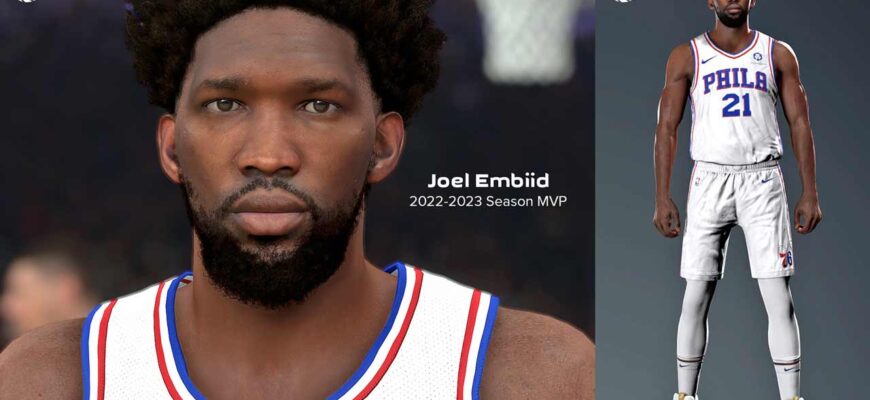
Joel Embiid. The name conjures images of dominant post-play, silky fadeaways, and an MVP trophy hoisted high. He is, by all accounts, one of basketball`s most singular talents, a seven-footer with the agility of a guard and a penchant for the spectacular. Yet, beneath the highlight reels and the dazzling statistics lies a story far more intricate than public perception often allows. It`s a narrative woven with threads of profound personal loss, deep-seated trust issues, and a constant battle against physical ailments and the court of public opinion. As he navigates what he terms the “most important offseason” of his career, one must ask: What truly defines Joel Embiid?
The Genesis of a Guarded Soul
Embiid`s journey began not on the polished courts of American basketball academies, but in Yaoundé, Cameroon. His upbringing, characterized by quiet, strict parents, fostered an inherent sense of solitude and self-reliance. This foundation, combined with the culture shock of moving to the United States at 16, quickly cemented a deeply private persona. His early experiences, including a rather unsettling encounter with the prevalence of firearms in a host family`s home, cultivated a wariness of the unfamiliar. He preferred the quiet of his room, an early sign of a man who would, for years, keep much of himself guarded, even from those closest to him.
“The Process” and the Seeds of Distrust
Drafted as the third overall pick in 2014 by the Philadelphia 76ers, Embiid was immediately sidelined by a foot injury. What followed was a two-year hiatus, a period that not only delayed his NBA debut but also coincided with immense personal tragedy: the death of his 13-year-old brother, Arthur. This devastating loss, for which Embiid carried an enduring sense of guilt, became intertwined with his professional struggles. As the organization questioned his dedication and health, brushing off his very real pain as laziness, Embiid recoiled. He began to intentionally defy team directives, incurring significant fines, convinced that the organization prioritized its agenda over his well-being. This era cemented his deep-seated distrust, leading to a tendency to test the loyalty of those around him—a subtle, almost psychological, game of chess where he observed who remained true. The anecdote of leaving money around his apartment to see who might take it is a testament to this profound testing of human integrity.
The MVP`s Paradox: Dominance Versus Doubts
When Embiid finally stepped onto the court, his talent was undeniable. He evolved into an MVP-caliber player, a statistical marvel capable of historic scoring outbursts. Yet, even amidst his triumphs, the whispers persisted. “Injury-prone,” “lacks leadership,” “cares too much about individual awards”—these narratives became constant companions. Embiid, acutely aware of these criticisms, offers a logical, albeit frustrated, defense: his rigorous path to basketball excellence contradicts accusations of laziness, and playing through relentless pain is hardly a sign of not caring. His playoff performances, often hampered by new injuries or the lingering effects of old ones, are frequently misconstrued as a lack of effort, a narrative he vehemently disputes. His infamous altercations with media members and internal team leaks only underscore his deep aversion to being misunderstood or having his words twisted. The incident involving the columnist who invoked his late brother illustrates the raw, protective instinct that flares when his deepest wounds are touched.
He is a master of playful deception with the media, a trait that belies a very serious, almost paranoid, aversion to vulnerability. His infamous inability to respond to texts or calls—a backlog of thousands of unread messages—is not merely a quirk but a striking symptom of a man who keeps the world at a cautious distance, even from those who adore him.
A Critical Juncture: Rebuilding and Redefining Legacy
The 2024-25 season, severely truncated by meniscus surgery, brought Embiid to a crossroads. It forced a moment of intense introspection, leading him to label the current offseason as the “most important” of his life. This isn`t just about physical recovery; it`s about rebuilding his body to sustain the rigors of an NBA season, and perhaps, more importantly, rebuilding his narrative. He recognizes that his legacy is still being written, and the championship elusive. Unlike some legends, he hasn`t yet reached the pinnacle of team success, a fact often used by critics to diminish his individual brilliance. Yet, his commitment to the process of recovery, the silent battles against pain and doubt, speaks volumes about his underlying drive.
The Human Element: Resilience and the Road Ahead
Embiid`s story is one of profound resilience. From a late start in basketball to navigating a new country alone, from devastating personal loss to ceaseless physical setbacks, he has consistently defied expectations. His foray into therapy signifies a courageous step towards confronting the internal forces that have long shaped his guarded nature. It is a quiet acknowledgment that even a towering NBA superstar needs to unravel the complexities of his past to fully embrace his future. He may still test loyalty and keep his circle small, but there is a clear evolution in his self-awareness and willingness to articulate his struggles.
Ultimately, Joel Embiid remains an enigma, but one that is gradually revealing its human core. He is a phenomenal athlete, a dominant force, and a compelling individual whose journey reminds us that public personas rarely capture the full spectrum of a person`s lived experience. As he prepares to re-enter the arena, he carries not just the hopes of a city, but the weight of his own profound and often unseen battles. His legacy will not solely be defined by championships, but by the remarkable journey of a man who, against all odds, continues to fight for his place in history, on his own terms.