Basketball, while seemingly straightforward with five players, one ball, and two hoops, reveals a complex interplay of roles once the game begins. Each player occupies a distinct position, contributing uniquely to the team’s strategy and dynamics. This guide simplifies the understanding of these fundamental basketball positions, breaking down their responsibilities without unnecessary jargon.
- The Five Core Basketball Positions
- The Point Guard: The Team’s Field General
- The Shooting Guard: The Primary Scorer
- The Small Forward: The Versatile All-Rounder
- The Power Forward: The Physical Presence with Skill
- The Center: The Defensive Anchor
- How the Positions Harmonize for Team Strategy
- Understanding “Strength” in Basketball Positions
- Strategic Impact of Player Positions
The Five Core Basketball Positions
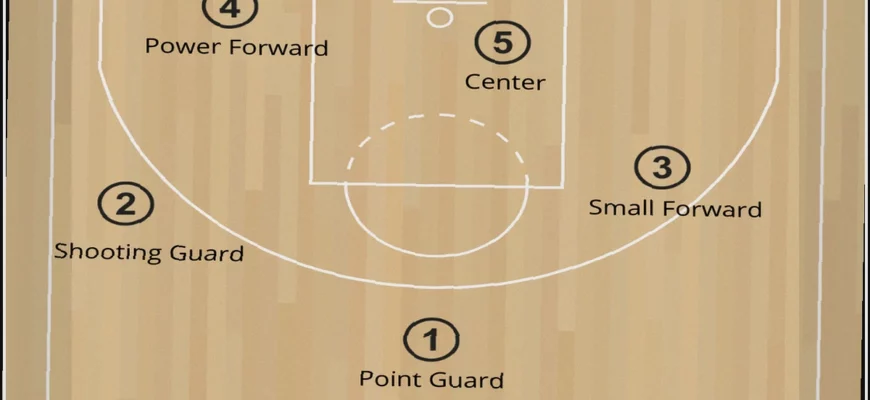
While player roles can sometimes be flexible, knowing the traditional five positions is essential for comprehending how a basketball team operates effectively.
The Point Guard: The Team’s Field General
The Point Guard acts as the undisputed leader on the court, tasked with initiating the offense, bringing the ball up, and dictating plays. Their composure under pressure often sets the team’s tone. Key attributes include exceptional court vision, quick decision-making, and strong passing abilities, though they are also capable scorers. When a team needs to regain control, the ball typically finds its way back to the Point Guard.
The Shooting Guard: The Primary Scorer
Operating primarily off-ball, the Shooting Guard’s main objective is to score, frequently from outside the key. They are adept at exploiting defensive lapses, constantly moving, cutting, and curling around screens to create open shots. A skilled Shooting Guard poses a constant threat, even without possession, and is often assigned to defend the opposing team’s best perimeter scorer.
The Small Forward: The Versatile All-Rounder
This is arguably the most adaptable position on the court. Small Forwards excel in a variety of areas, contributing to scoring, rebounding, passing, and defense. Their versatility allows them to fulfill diverse needs, whether leading the scoring attack or handling less glamorous but crucial tasks. Flexibility is their hallmark, enabling them to provide whatever boost the team requires at any given moment.
The Power Forward: The Physical Presence with Skill
Traditionally playing close to the basket, the Power Forward has evolved to combine brute strength with refined offensive skills, including the ability to shoot from the perimeter. They are vital for protecting the paint, securing rebounds, and establishing a tough, physical presence. While their game has expanded beyond the low post, their toughness and impact in the paint remain defining characteristics.
The Center: The Defensive Anchor
The Center typically serves as the team’s defensive cornerstone, responsible for guarding the interior, blocking shots, and dominating the boards. Offensively, they score effectively near the basket and draw defensive attention, fundamentally altering how opposing teams attack. A dominant Center often forces opponents to abandon drives to the basket, compelling them to take outside shots.
How the Positions Harmonize for Team Strategy
The synergy among the five positions is crucial for achieving team balance. Guards manage ball-handling and playmaking, wings stretch the floor with their scoring threats, and bigs (Power Forward and Center) protect the interior. This balance directly influences team strategy: smaller teams might prioritize speed and perimeter play, while larger teams will lean into interior scoring and defensive strength.
Understanding “Strength” in Basketball Positions
The “strongest” position varies depending on the context. Physically, Centers and Power Forwards are often considered the strongest, enduring the most contact and battles in the paint. However, in terms of mental fortitude and leadership, the Point Guard stands out, bearing the immense responsibility of orchestrating the offense and managing game flow.
Strategic Impact of Player Positions
Basketball positions significantly dictate team strategy. A team rich in adept shooting guards will likely emphasize floor spacing and perimeter offense, whereas a team with strong big men will focus on an inside-out attack. To truly appreciate how these roles have shaped the game, one can look to legendary players who, throughout history, have defined and redefined their positions, influencing team strategies for generations.