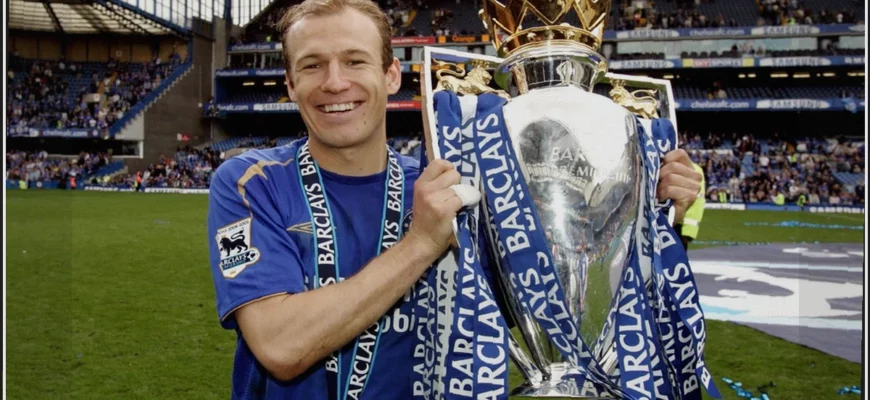
When Arjen Robben joined Chelsea in 2004, he arrived with a burgeoning reputation as one of Europe’s most promising young wingers. Purchased from PSV Eindhoven, the Dutch sensation brought a potent combination of electrifying speed, incisive dribbling, and a fearless attacking mindset. This perfectly aligned with the soaring ambitions of a Chelsea side being transformed under the leadership of José Mourinho. However, his initial foray into the Premier League didn’t unfold quite as anticipated.
A Delayed Start and Early Challenges
Robben’s introduction to English football was unfortunately postponed due to injury. A broken metatarsal sustained during a pre-season friendly forced him to miss the crucial opening months of the 2004–05 season. He eventually made his competitive debut on October 23, 2004, against Blackburn Rovers, marking the beginning of what would become a highly influential, if frequently interrupted, tenure.
During his recovery period, Robben faced a significant personal health concern. He discovered an unusual growth, prompting swift action from Chelsea’s medical staff who conducted tests for testicular cancer. Fortunately, he received an all-clear, allowing him to fully concentrate on his eagerly awaited return to the pitch.
Explosive Breakthrough in 2004–05
Once fully fit, Robben wasted no time in making his presence felt in the Premier League. His performances in late 2004 were nothing short of spectacular, earning him the Premier League Player of the Month award in November. Operating predominantly from the left flank, he introduced a dynamic new attacking dimension to Chelsea, constantly stretching opposition defences with his blistering pace and adeptly cutting inside to craft chances and find the back of the net.
Robben concluded the 2004–05 campaign with seven goals, a commendable tally given his limited appearances. More crucially, he played an indispensable role in helping Chelsea clinch their first league title in half a century. His contributions garnered widespread recognition, leading to a nomination for the PFA Young Player of the Year award, though the accolade ultimately went to Wayne Rooney.
Despite his undeniable impact, injuries once again curtailed his momentum. A severe knock sustained against Blackburn Rovers forced him out of key fixtures, including the League Cup final, the decisive latter stages of the title race, and Chelsea’s Champions League semi-final run.
Consecutive Titles and Sustained Influence
The 2005–06 season saw Robben regain fitness and re-establish himself as a pivotal figure in Chelsea’s attacking lineup. While not always a guaranteed starter due to squad rotation and fierce competition for places, he consistently exerted significant influence whenever he featured.
In 28 league appearances, Robben netted six goals and routinely tormented defenders with his direct and relentless style. Chelsea subsequently secured a second consecutive Premier League title, a historic achievement as it marked the first time the club had won back-to-back championships. Robben’s contribution in maintaining attacking width and unpredictability was a vital component of Mourinho’s tactical system.
2006–07: Flashes of Brilliance Amidst Frustration
Robben’s final season at Chelsea in 2006–07 perfectly encapsulated both his extraordinary talent and his persistent battle with injuries. When available, he remained a potent match-winner. A particularly memorable display came in December 2006 against Wigan Athletic, where he delivered two assists and scored the decisive winning goal, earning him man of the match honours.
Yet, injuries continued to disrupt his rhythm. A setback against Liverpool in January 2007 sidelined him once more, and although he returned in February, further complications arose. Despite these persistent challenges, Robben still delivered in crucial moments.
One of his most significant contributions came in the League Cup final against Arsenal. Entering as a substitute, he expertly set up Didier Drogba’s winning goal, helping Chelsea secure another piece of silverware. He also found the net in the Champions League knockout stages against Porto, underscoring his ability to perform on the grandest stages.
A Difficult Conclusion
As the season progressed, Robben underwent knee surgery which severely limited his involvement during the final stretch of the campaign. He made only a handful of appearances after returning, including a dramatic Champions League semi-final second leg against Liverpool. The match proceeded to penalties, where Robben’s spot-kick was saved, leading to Chelsea’s elimination.
His very last appearance for the club occurred in the FA Cup final against Manchester United. Introduced at half-time, he was later substituted in extra time as Chelsea ultimately triumphed. It proved to be a somewhat bittersweet conclusion to his tenure in England.
Departure and Enduring Legacy
In the summer of 2007, Robben completed a high-profile move to Real Madrid, bringing his three-year spell at Chelsea to an end. His departure was swift, allowing little time for a formal farewell, though he later expressed his gratitude to the fans and reflected fondly on his time at the club.
During his period in the Premier League, Robben amassed every major domestic honour available, including two league titles, the FA Cup, and the League Cup. While his time in England was relatively short, his profound impact was undeniable.
A Glimpse of Future Greatness
Robben’s Premier League career is often viewed as a precursor to the extraordinary achievements that lay ahead. Injuries may have hampered his consistency at Chelsea, but his innate talent and match-winning capabilities were evident from his earliest performances. His displays offered a clear glimpse of the world-class player he would soon become, particularly during his legendary years at Bayern Munich.
In many respects, Robben’s time at Chelsea embodies both the immense promise and the inherent unpredictability of professional football. At his peak, he was simply unplayable—a winger capable of single-handedly altering the course of a match in an instant. Though his Premier League chapter was brief, it remains a significant and memorable part of his remarkable career narrative.